The Ho-Hum COP 28: More Virtue Signaling Ahead?

Another year, another climate change conference.

The 28th Conference of the Parties (COP28) to the UN Framework Convention on Climate Change (UNFCCC) will be held in Dubai, United Arab Emirates, from November 30 to December 12, 2023. The purported goal of the annual global conference is to bring together leaders from governments, businesses, nongovernment organizations, and civil society to find concrete solutions to the defining issue of our time.

Each time, the UN comes up with some slogan to instill hope, excitement, or call for action to give the impression that these so-called global leaders are actually getting things done. Last year’s slogan was “Delivering for People and the Planet” for COP27, and this year’s theme for COP28 is “Climate Action Can’t Wait.” (Notice the sense of urgency in this year’s theme instead of “togetherness” and “for the planet” from the previous years?)

UN slogans for recent COPs.

Climate Talks and Bad PR

And blah blah blah. Does anyone else feel that it is starting to look a lot like Earth Day 🌍, where people symbolically turn their lights off 💡 for one hour? Or how about Pride Month, where companies immediately revert their rainbow-color logos to normal the moment July rolls around? It is the time of year that’s become more of a feel-good, virtue signaling exercise than a way to advance climate action.

Some worry that the public perception of this year’s COP has already been on a rocky start. Earlier this year, some members of the United States Congress and the European Parliament expressed concerns on “permitting private sector polluters to exert undue influence on UN Framework Convention on Climate Change (UNFCCC) processes” in a letter.

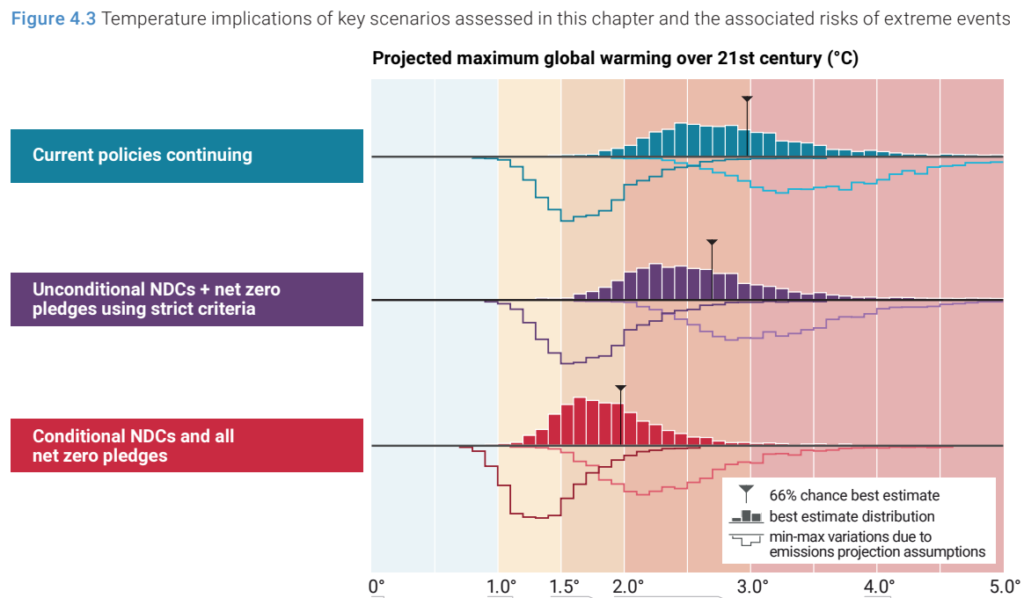
In addition, despite repeated urgings to limit global warming to 1.5 degrees Celsius (the Paris Agreement goal), a new UN report shows that the world is barreling toward 3 degrees Celsius warmer by the end of this century.

Figure 4.3 of the new UN report shows that current policies are likely to lead to a 3 degrees Celsius increase.

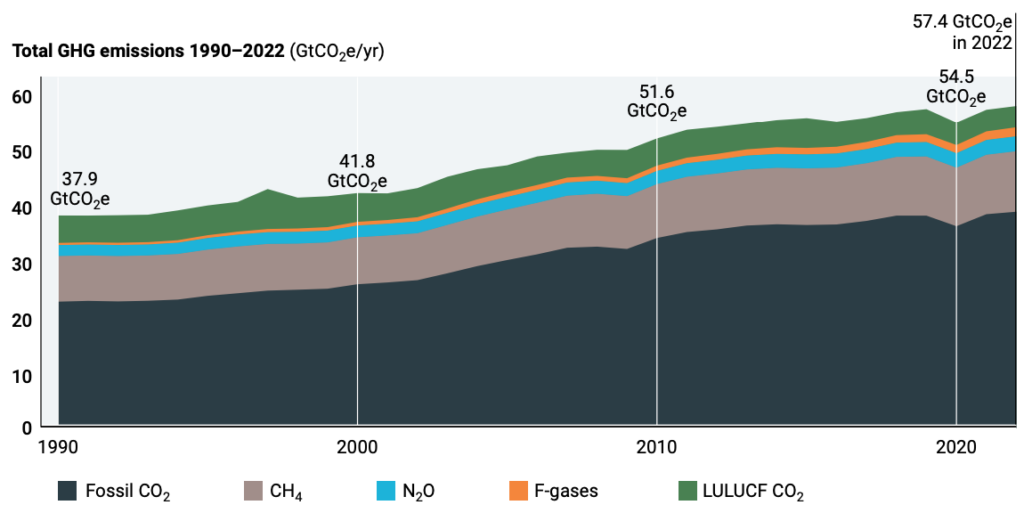
But this is not really news. Previous reports have also similarly shown repeated failures of policies to keep countries’ climate pledges and promises (nationally determined contributions, or NDCs) in check. For example, last year’s UN Emissions Gap report (UNEGR) states that “updated national pledges since COP26 – held in 2021 in Glasgow, UK – make a negligible difference to predicted 2030 emissions and that we are far from the Paris Agreement goal of limiting global warming to well below 2°C, preferably 1.5°C. Policies currently in place point to a 2.8°C temperature rise by the end of the century.”

Source: UN Emissions Gap Report 2023

Past COPs, Failed Aspirations, and Empty Promises

But since the first COP in 1995, what have we achieved? The track records are not good. Global emissions continue to trend upward, leaders of developed countries are accusing developing countries of not doing enough and vice versa, and these so-called leaders are lecturing ordinary people to do their share while flying around in their private jets

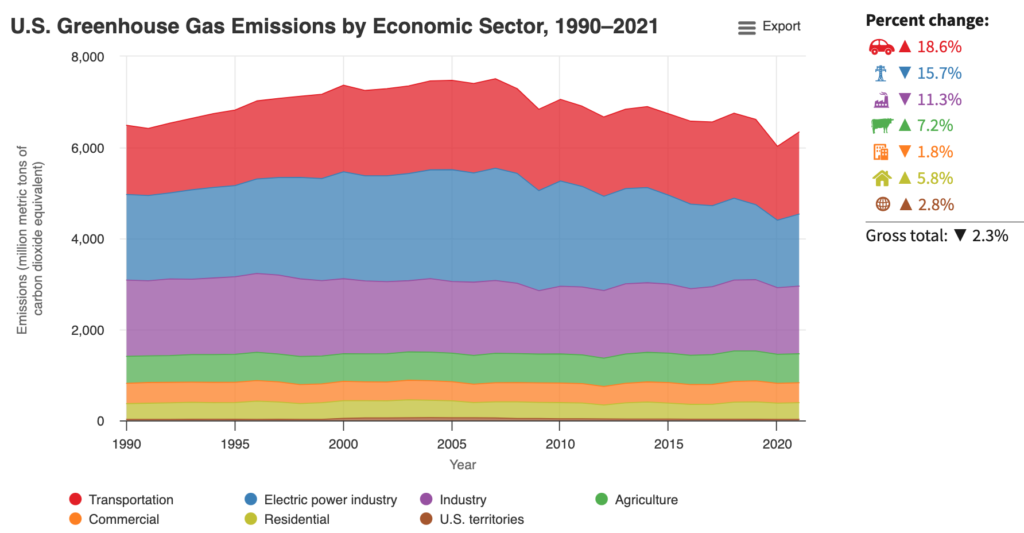
Most industrialized countries and some central European economies in transition agreed to reduce GHG emissions by 2008-2012 to 6%-8% below 1990 levels during the Kyoto Protocol (COP3, 1997). The U.S. would be required to reduce its total emissions an average of 7% below 1990 levels. But the Bush administration rejected the protocol in 2001, arguing that ratifying the treaty would create economic setbacks in the US and did not put enough pressure to limit emissions from developing nations.

That was quite a rich statement coming from the leader of the country with the highest GHG emissions. And the U.S. failed to reduce emissions below 1990 levels (GHG emissions peaked in 2007).

Source: U.S. EPA's Inventory of GHG Emissions and SInks: 1990-2021

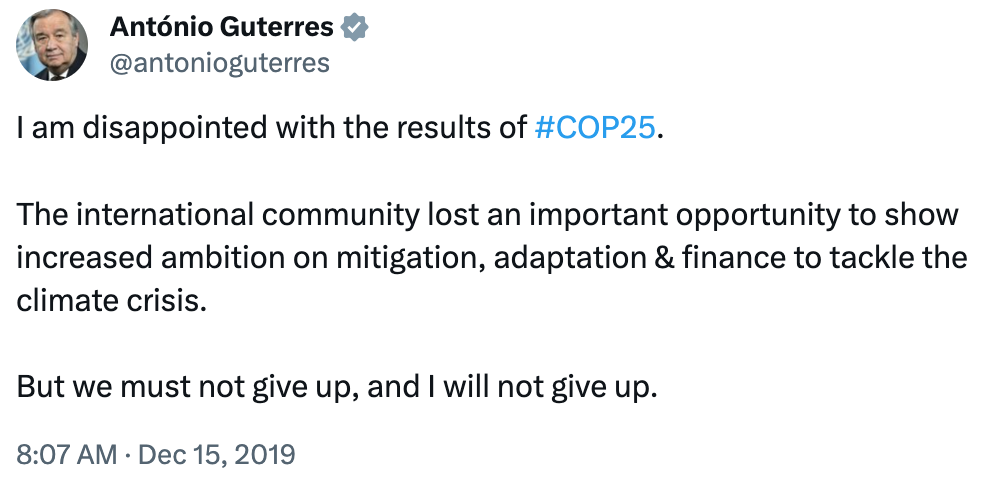
The most recent climate change conferences did not end on a high note. COP25 (2019) became the longest on record when it ran 44 hours over schedule. Part of the reason for the schedule overrun was due to delegates unable to reach consensus in many areas, pushing decisions into the following year under “Rule 16” of the UN climate process, which states that “any item of the agenda of an ordinary session, consideration of which has not been completed at the session, shall be included automatically in the agenda of the next ordinary session, unless otherwise decided by the Conference of the Parties.” Overall, global leaders had failed to unite to show increased ambition on mitigation, adaptation & finance to tackle the climate crisis.

COP27 also had a tepid end in which countries agreed to outcomes that reflected only modest, incremental progress on reducing emissions, despite a clear emissions gap from the UNEGRs. The overall progress on adaptation left much to be desired. Finally, despite the establishment of a loss and damage fund, the countries were not able to determine who would provide the funding and which vulnerable developing countries will receive the funding (to be determined in COP28).

So, what will it be for COP28? More real climate actions and less virtue-signaling, pandering, and grifting. Please.

LET’S KEEP IN TOUCH!

To be added to our mailing lists, please provide the following information 😎

Read our privacy policy for more info.

3 Comments

  1. Is it just me, or are there a lot of people at COP28? Why do these people need to burn jet fuel and fly to Dubai instead of doing it remotely via Zoom? I thought they want to solve climate change? But their actions speak otherwise.

    • It is not just you. There are over 70,000 people attending COP28 this time. As for why not doing it remotely? I guess the preference to meet and speak in person is strong. Or perhaps the attendees feel that their presence is more seen and felt if they are there in person? Who knows.

  2. Pingback:The Confusing, Mixed Signals of COP28 – Clean Economy Chronicles