
With 80,000 attendees, COP28 is the largest UN climate summit ever. By comparison, last year’s COP27 had about 50,000 accredited attendees. Yet, the public reception this year have been rather… meh?
It shouldn’t be surprising. COP28 had been plagued with scandals months before the summit, from reports that the UAE presidency planned to use the meeting to secure oil and gas deals, to the resignation of Hilda Heine, former president of the low-lying, climate vulnerable Marshall Islands and (former) member of the main advisory board of the COP28.
For three decades, year after year, delegates talk and talk, while greenhouse gas emissions keep barreling toward new highs. Time after time, representatives and leaders make flashy promises only to then walk out of the agreements or quietly sweep the unmet goals under the rug.
And let’s not forget that fossil fuel lobbyists are having an increasingly dominant presence at these COPs. At COP26, there were 500 delegates with a fossil fuel background. At COP27, that increased to to over 600 delegates. And COP28? Drum roll please… there were almost 2,500 representatives from fossil fuel industries, per the BBC.
This is akin to allowing representatives of the military industrial complex to attend antiwar protests, or NIMBYs to attend housing development meetings.
Déjà Vu! I've Seen This Commitment Before?
COP28 concluded with a compromised agreement to transition away from fossil fuels. Mainstream media hailed this as a historic outcome and a landmark deal.
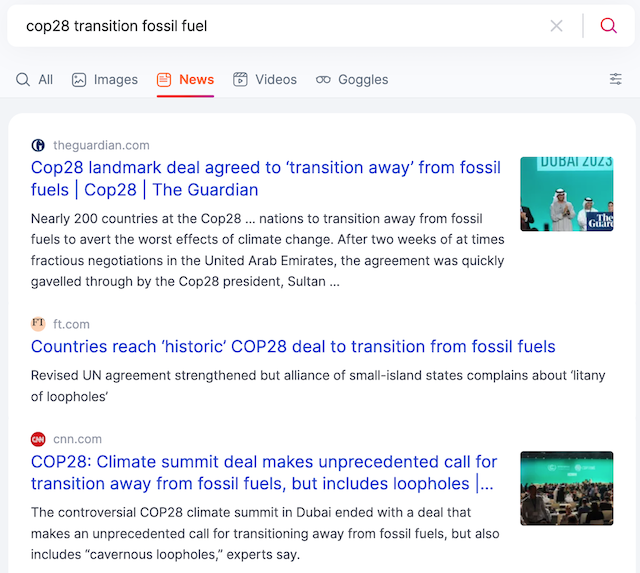
That sounds nice, except, didn’t we already hear something like this before? For instance, the COP27 agreements accelerate “efforts towards the phase down of unabated coal power and phase-out of inefficient fossil fuel subsidies.” Meanwhile, at COP26 in Glasgow, delegates pledged to “phase down” unabated coal and committed to net-zero targets (eventually in the faraway future).
While transitioning from fossil fuels sounds stronger than phasing down unabated coal and phasing out inefficient fossil fuel subsidies, the wordings are simply confusing. What do they mean by “unabated coal” (and what is abated coal)? What constitute (in)efficient fossil fuel subsidies? Little clarifications have been given.
Even if COP28 defines abated as at least 90% of fossil fuel emissions from power plants, and 50%-80% of methane from energy supply, nothing is said about downstream emissions. Not to mention, reaching net-zero emissions imply significantly moving away from fossil fuels; it is impossible to CCS (which is carbon neutral at best but often not) or CDR one’s emissions away given their lack of economic feasibilities, proven track record, and other factors.
The UN’s slogan for COP28 is “climate action can’t wait”, but the outcomes of COP28 simply don’t reflect a sense of urgency.
The world is addicted to fossil fuels, judging by the fact that politicians (still) can’t agree to a fossil fuel phaseout.