Notice: Function _load_textdomain_just_in_time was called incorrectly. Translation loading for the mailpoet domain was triggered too early. This is usually an indicator for some code in the plugin or theme running too early. Translations should be loaded at the init action or later. Please see Debugging in WordPress for more information. (This message was added in version 6.7.0.) in /home/yxucktnn/public_html/wp-includes/functions.php on line 6131

Notice: Function _load_textdomain_just_in_time was called incorrectly. Translation loading for the inspiro domain was triggered too early. This is usually an indicator for some code in the plugin or theme running too early. Translations should be loaded at the init action or later. Please see Debugging in WordPress for more information. (This message was added in version 6.7.0.) in /home/yxucktnn/public_html/wp-includes/functions.php on line 6131

Warning: Cannot modify header information - headers already sent by (output started at /home/yxucktnn/public_html/wp-includes/functions.php:6131) in /home/yxucktnn/public_html/wp-includes/feed-rss2.php on line 8
International Policy – Clean Economy Chronicles https://cechronicles.com Economics. Energy. Innovation. Strategy. Sat, 22 Jun 2024 19:04:36 +0000 en-US hourly 1 https://wordpress.org/?v=6.9.4 https://cechronicles.com/wp-content/uploads/2023/07/cropped-Screen-Shot-2023-07-28-at-22.01.01-32x32.png International Policy – Clean Economy Chronicles https://cechronicles.com 32 32 Top Issues to Tackle for a Clean Economy in 2024 https://cechronicles.com/index.php/2024/01/04/top-issues-to-tackle-for-a-clean-economy-in-2024/ https://cechronicles.com/index.php/2024/01/04/top-issues-to-tackle-for-a-clean-economy-in-2024/#comments Thu, 04 Jan 2024 18:35:08 +0000 https://cechronicles.com/?p=371 Read more "Top Issues to Tackle for a Clean Economy in 2024"

]]>

Happy New Year! As we march toward 2024, the need for a cleaner economy remains as important as ever. A quarter into the 21st century, and a quarter away from the proverbial 2050 net-zero deadline, in the quest of energy transition, humans have achieved quite a lot, but they have also fumbled a lot.

Looking Back on Energy Transition: The Good and the Bad

In industrialized countries, greenhouse gas emissions have peaked and are slowly coming down thanks to renewable energy becoming more mainstream in the electric power sector. New scientific and technological breakthroughs have contributed to the increasing popularity of vehicles that run on alternative fuels and powertrains (e.g., hybrid, battery electric, natural gas). Both private and public sectors have continued to invest in nascent but promising clean energy innovations such as clean hydrogen, carbon capture and utilization, sustainable aviation and marine fuels, modular nuclear with advanced reactors, and energy storage solutions.

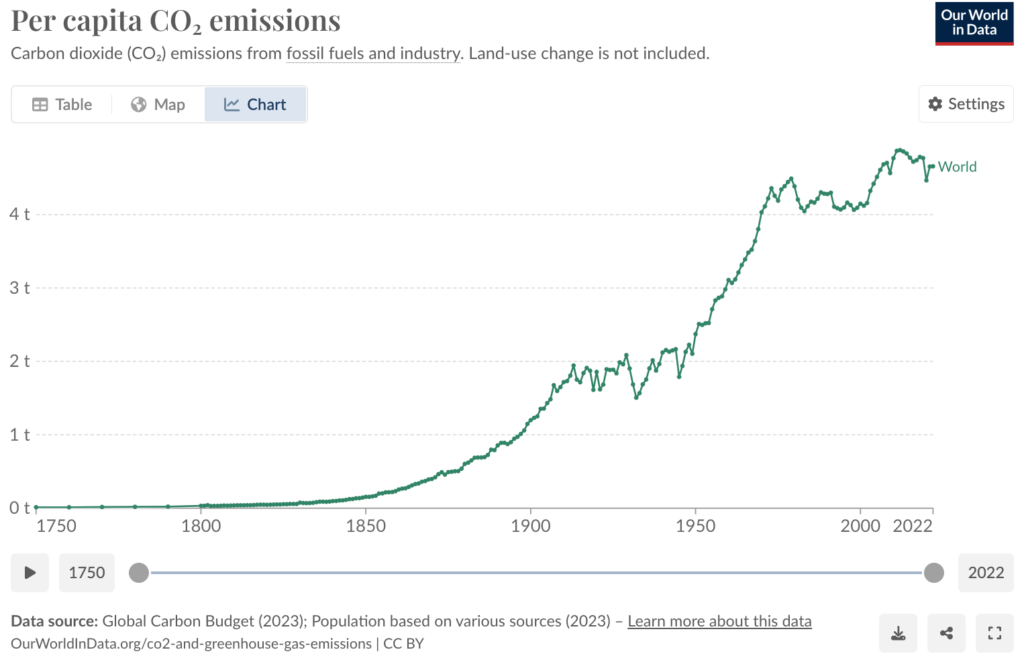
But at the same time, GHG emissions continue to rise globally. As underdeveloped countries’ standard of living rise, their energy consumptions will also rise. None of these countries will voluntarily reduce energy consumption (thus sacrificing economic development) to make a dent in GHG emissions, especially when large and developed nations like the United States are the biggest polluters. Some of the highlights of the last few climate change conferences include confusing signals, weak and non-binding agreements, and  finger-pointing among representatives on who bears the responsibility of climate loss and damage, as well as who should fund climate resilience, mitigation, and adaptation. 

Despite momentary breaks, global emissions keep rising.

Top Clean Energy and Climate Issues to Tackle in 2024

Given the track record, needless to say, a lot remains to be done. But given current progress, it isn’t possible, feasible, nor realistic to act on all fronts. However, some issues are often considered critical for laying the foundation of a clean and sustainable economy. Here, I propose a few top priorities to tackle, as their importance can vary based on regional contexts, immediate challenges, and the urgency of certain environmental threats:

Transition to Renewable Energy: Shifting away from fossil fuels is a key step to mitigate climate change and reduce dependence on non-renewable resources. Carbon dioxide removal and carbon capture technologies are still not ready for deployment, for now, the best way to reduce emissions is to shift toward carbon free and low carbon fuel sources.

Energy Efficiency: Improving energy efficiency is still a cost-effective way to reduce overall energy consumption and decrease environmental impact. Improving energy efficiency also has the added benefit of lowering energy costs and saving money.

Sustainable Transportation: Transforming transportation systems to be more sustainable is crucial for reducing emissions and promoting cleaner modes of travel. As developing countries continue to improve their economic well-beings, demand for private automobiles is expected to increase.

Circular Economy: Moving towards a circular economy helps minimize waste and encourages the responsible use and disposal of products. We simply send too much junk into the landfills and are failing spectacularly on the 3Rs.

Carbon Pricing: Implementing effective carbon pricing mechanisms provides economic incentives for businesses to reduce their carbon footprint. Despite the recent surge in carbon price ($190 per ton), we can expect it to go up.

Technological Innovation: Investing in clean technologies and innovations can drive systemic change across various industries. Technological innovation on cleantech and climate tech may also reduce the burden on climate mitigation and adaptation.

Environmental Regulation and Governance: Strong environmental governance ensures that industries operate responsibly and adhere to sustainability standards. We all know that the private marginal environmental cost and the social marginal environmental cost are completely misaligned. But no one is currently incentivized to align the two.

International Collaboration: Global cooperation is essential for addressing environmental challenges that transcend national borders, such as climate change. But will future climate change conferences be mired in further infighting, finger pointing, and political bickering?

]]>
https://cechronicles.com/index.php/2024/01/04/top-issues-to-tackle-for-a-clean-economy-in-2024/feed/ 1
The Confusing, Mixed Signals of COP28 https://cechronicles.com/index.php/2023/12/14/the-confusing-mixed-signals-of-cop28/ https://cechronicles.com/index.php/2023/12/14/the-confusing-mixed-signals-of-cop28/#comments Thu, 14 Dec 2023 16:32:22 +0000 https://cechronicles.com/?p=362 Read more "The Confusing, Mixed Signals of COP28"

]]>

With 80,000 attendees, COP28 is the largest UN climate summit ever. By comparison, last year’s COP27 had about 50,000 accredited attendees. Yet, the public reception this year have been rather… meh?

It shouldn’t be surprising. COP28 had been plagued with scandals months before the summit, from reports that the UAE presidency planned to use the meeting to secure oil and gas deals, to the resignation of Hilda Heine, former president of the low-lying, climate vulnerable Marshall Islands and (former) member of the main advisory board of the COP28.

For three decades, year after year, delegates talk and talk, while greenhouse gas emissions keep barreling toward new highs. Time after time, representatives and leaders make flashy promises only to then walk out of the agreements or quietly sweep the unmet goals under the rug.

And let’s not forget that fossil fuel lobbyists are having an increasingly dominant presence at these COPs. At COP26, there were 500 delegates with a fossil fuel background. At COP27, that increased to to over 600 delegates. And COP28? Drum roll please… there were almost 2,500 representatives from fossil fuel industries, per the BBC

This is akin to allowing representatives of the military industrial complex to attend antiwar protests, or NIMBYs to attend housing development meetings.

Déjà Vu! I've Seen This Commitment Before?

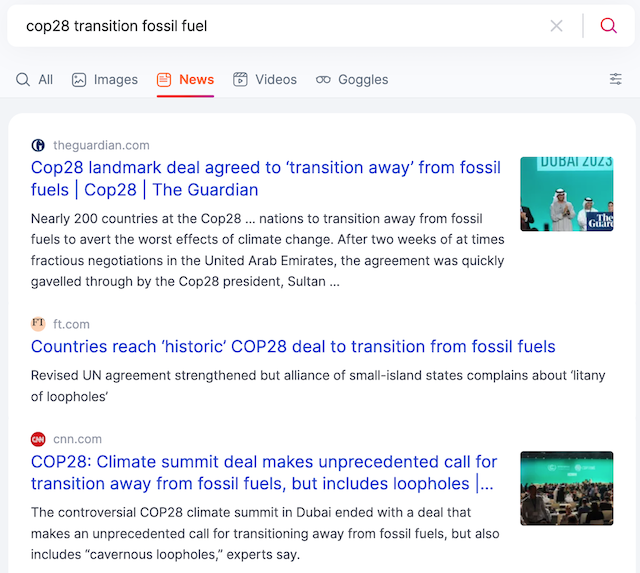
COP28 concluded with a compromised agreement to transition away from fossil fuels. Mainstream media hailed this as a historic outcome and a landmark deal.

Mainstream media's coverage of COP28 deal.

That sounds nice, except, didn’t we already hear something like this before? For instance, the COP27 agreements accelerate “efforts towards the phase down of unabated coal power and phase-out of inefficient fossil fuel subsidies.” Meanwhile, at COP26 in Glasgow, delegates pledged to “phase down” unabated coal and committed to net-zero targets (eventually in the faraway future).

While transitioning from fossil fuels sounds stronger than phasing down unabated coal and phasing out inefficient fossil fuel subsidies, the wordings are simply confusing. What do they mean by “unabated coal” (and what is abated coal)? What constitute (in)efficient fossil fuel subsidies? Little clarifications have been given.

Even if COP28 defines abated as at least 90% of fossil fuel emissions from power plants, and 50%-80% of methane from energy supply, nothing is said about downstream emissions. Not to mention, reaching net-zero emissions imply significantly moving away from fossil fuels; it is impossible to CCS (which is carbon neutral at best but often not) or CDR one’s emissions away given their lack of economic feasibilities, proven track record, and other factors.

The UN’s slogan for COP28 is “climate action can’t wait”, but the outcomes of COP28 simply don’t reflect a sense of urgency.

]]>
https://cechronicles.com/index.php/2023/12/14/the-confusing-mixed-signals-of-cop28/feed/ 2
The Ho-Hum COP 28: More Virtue Signaling Ahead? https://cechronicles.com/index.php/2023/11/29/the-ho-hum-cop-28-more-virtue-signaling-ahead/ https://cechronicles.com/index.php/2023/11/29/the-ho-hum-cop-28-more-virtue-signaling-ahead/#comments Thu, 30 Nov 2023 04:07:02 +0000 https://cechronicles.com/?p=339 Read more "The Ho-Hum COP 28: More Virtue Signaling Ahead?"

]]>

Another year, another climate change conference.

The 28th Conference of the Parties (COP28) to the UN Framework Convention on Climate Change (UNFCCC) will be held in Dubai, United Arab Emirates, from November 30 to December 12, 2023. The purported goal of the annual global conference is to bring together leaders from governments, businesses, nongovernment organizations, and civil society to find concrete solutions to the defining issue of our time.

Each time, the UN comes up with some slogan to instill hope, excitement, or call for action to give the impression that these so-called global leaders are actually getting things done. Last year’s slogan was “Delivering for People and the Planet” for COP27, and this year’s theme for COP28 is “Climate Action Can’t Wait.” (Notice the sense of urgency in this year’s theme instead of “togetherness” and “for the planet” from the previous years?)

UN slogans for recent COPs.

Climate Talks and Bad PR

And blah blah blah. Does anyone else feel that it is starting to look a lot like Earth Day 🌍, where people symbolically turn their lights off 💡 for one hour? Or how about Pride Month, where companies immediately revert their rainbow-color logos to normal the moment July rolls around? It is the time of year that’s become more of a feel-good, virtue signaling exercise than a way to advance climate action.

Some worry that the public perception of this year’s COP has already been on a rocky start. Earlier this year, some members of the United States Congress and the European Parliament expressed concerns on “permitting private sector polluters to exert undue influence on UN Framework Convention on Climate Change (UNFCCC) processes” in a letter.

In addition, despite repeated urgings to limit global warming to 1.5 degrees Celsius (the Paris Agreement goal), a new UN report shows that the world is barreling toward 3 degrees Celsius warmer by the end of this century.
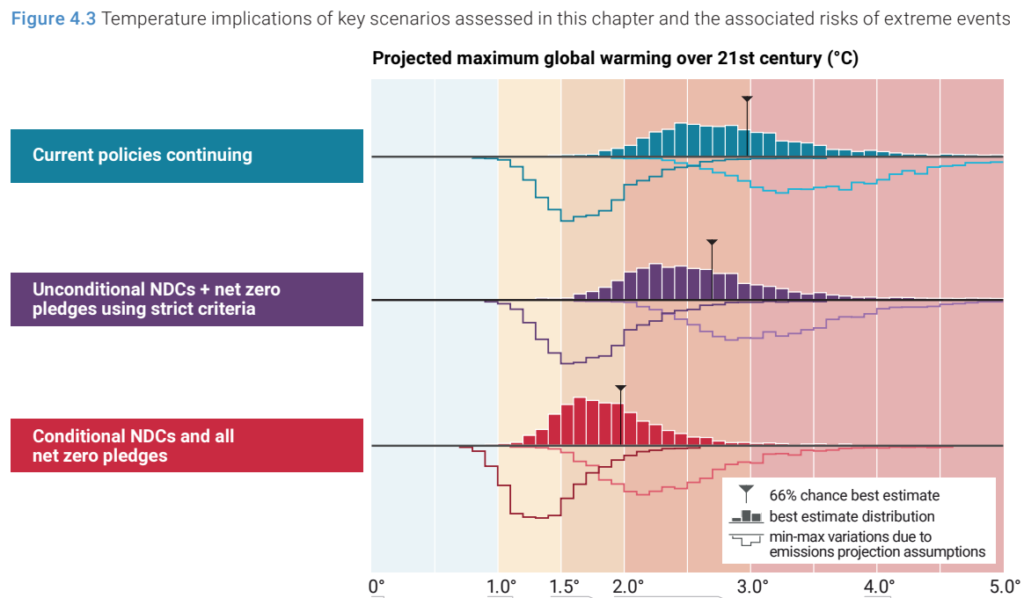
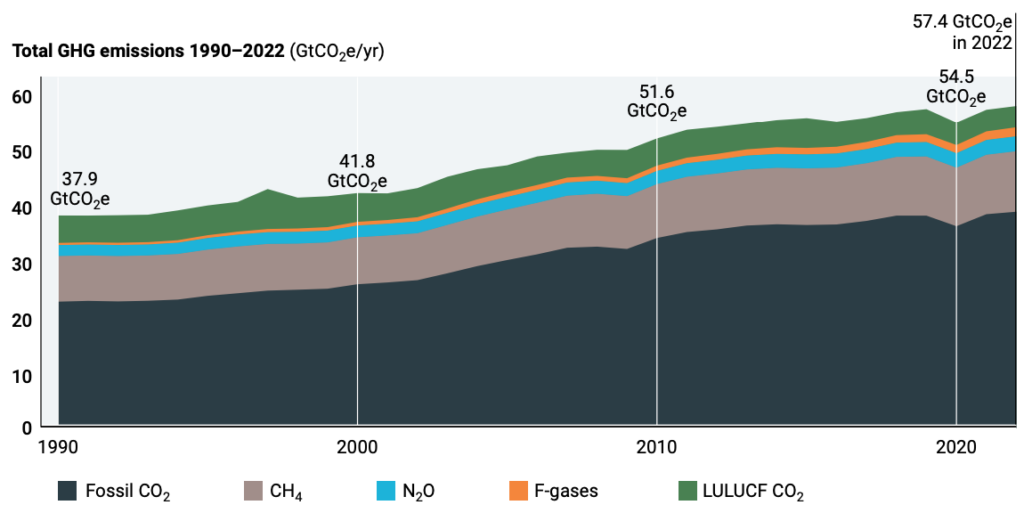
Figure 4.3 of the new UN report shows that current policies are likely to lead to a 3 degrees Celsius increase.

But this is not really news. Previous reports have also similarly shown repeated failures of policies to keep countries’ climate pledges and promises (nationally determined contributions, or NDCs) in check. For example, last year’s UN Emissions Gap report (UNEGR) states that “updated national pledges since COP26 – held in 2021 in Glasgow, UK – make a negligible difference to predicted 2030 emissions and that we are far from the Paris Agreement goal of limiting global warming to well below 2°C, preferably 1.5°C. Policies currently in place point to a 2.8°C temperature rise by the end of the century.”

Source: UN Emissions Gap Report 2023

Past COPs, Failed Aspirations, and Empty Promises

But since the first COP in 1995, what have we achieved? The track records are not good. Global emissions continue to trend upward, leaders of developed countries are accusing developing countries of not doing enough and vice versa, and these so-called leaders are lecturing ordinary people to do their share while flying around in their private jets

Most industrialized countries and some central European economies in transition agreed to reduce GHG emissions by 2008-2012 to 6%-8% below 1990 levels during the Kyoto Protocol (COP3, 1997). The U.S. would be required to reduce its total emissions an average of 7% below 1990 levels. But the Bush administration rejected the protocol in 2001, arguing that ratifying the treaty would create economic setbacks in the US and did not put enough pressure to limit emissions from developing nations.

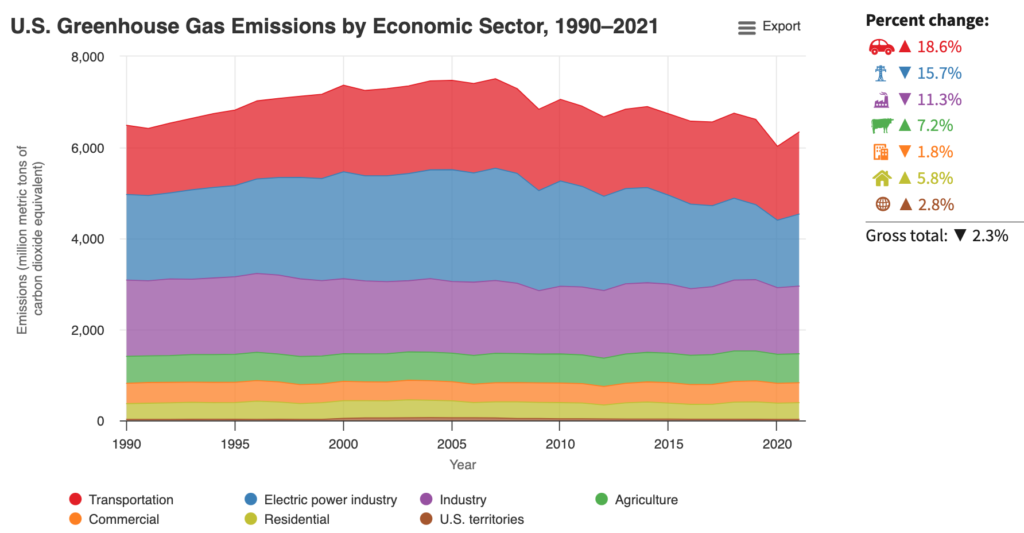
That was quite a rich statement coming from the leader of the country with the highest GHG emissions. And the U.S. failed to reduce emissions below 1990 levels (GHG emissions peaked in 2007).

Source: U.S. EPA's Inventory of GHG Emissions and SInks: 1990-2021

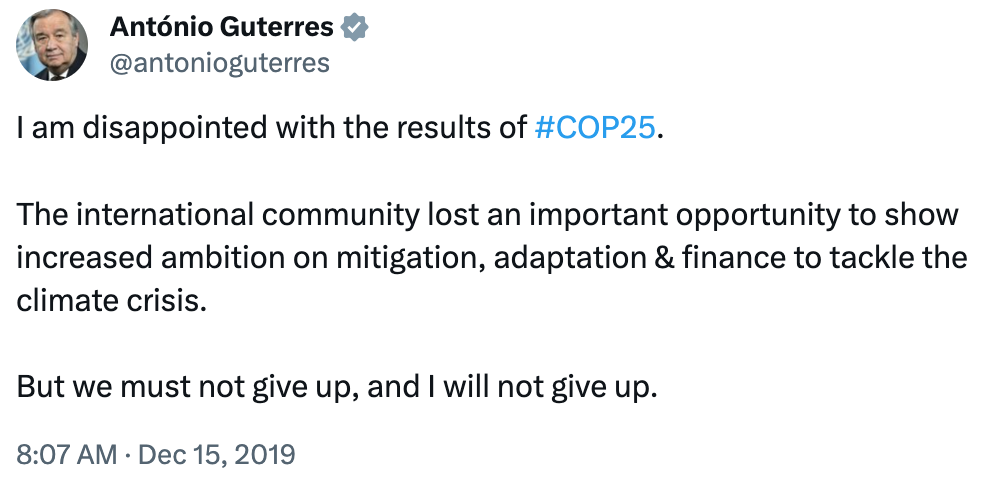
The most recent climate change conferences did not end on a high note. COP25 (2019) became the longest on record when it ran 44 hours over schedule. Part of the reason for the schedule overrun was due to delegates unable to reach consensus in many areas, pushing decisions into the following year under “Rule 16” of the UN climate process, which states that “any item of the agenda of an ordinary session, consideration of which has not been completed at the session, shall be included automatically in the agenda of the next ordinary session, unless otherwise decided by the Conference of the Parties.” Overall, global leaders had failed to unite to show increased ambition on mitigation, adaptation & finance to tackle the climate crisis.

COP27 also had a tepid end in which countries agreed to outcomes that reflected only modest, incremental progress on reducing emissions, despite a clear emissions gap from the UNEGRs. The overall progress on adaptation left much to be desired. Finally, despite the establishment of a loss and damage fund, the countries were not able to determine who would provide the funding and which vulnerable developing countries will receive the funding (to be determined in COP28).

So, what will it be for COP28? More real climate actions and less virtue-signaling, pandering, and grifting. Please.

]]>
https://cechronicles.com/index.php/2023/11/29/the-ho-hum-cop-28-more-virtue-signaling-ahead/feed/ 3
Some Advice on the U.K.-U.S. Green Shipping Corridor https://cechronicles.com/index.php/2023/10/02/some-advice-on-the-u-k-u-s-green-shipping-corridor/ https://cechronicles.com/index.php/2023/10/02/some-advice-on-the-u-k-u-s-green-shipping-corridor/#comments Mon, 02 Oct 2023 15:57:00 +0000 https://cechronicles.com/?p=275 Read more "Some Advice on the U.K.-U.S. Green Shipping Corridor"

]]>

Recently, the Department of Energy (DOE) posted a request for information (RFI) regarding the development of green shipping corridors (GSCs) between the United States and the United Kingdom (DE-FOA-0003156). The purpose of the RFI is to solicit feedback from maritime stakeholders on issues related to the establishment of green shipping corridors between the U.S. and the U.K.

We are pleased to submit our comments regarding the U.K.-U.S. GSCs. This post summarizes the main points raised in our filing.

Read the filing below.

What are Green Shipping Corridors?

Green shipping corridors are maritime routes that showcase zero- and near zero- emission lifecycle fuels and technologies with the ambition to achieve zero greenhouse gas emissions across all aspects of the corridor in support of sector-wide decarbonization no later than 2050.

The concept of GSCs debuted back in COP26 as part of the First Movers Coalition. This means decarbonization of the maritime sector was NOT part of the Paris Agreement in 2015.

Ideally, Green shipping corridors should lay the ground for the massive reductions that will happen once these solutions roll out globally. Within the purview of this RFI, if the U.K.-U.S. partnership is successful, then ultimately zero-emission shipping should be a commercially viable option that can be deployed anywhere and not just on certain routes by 2030.

Challenges and Barriers

There are several challenges and barriers for a green shipping corridor between the U.S. and U.K.

Regarding technology barriers, uncertainty on the fuel pathways persists at the global level, and there is no clear alternative fuel of choice (unlike, say, sustainable aviation fuel for the aviation sector). Innovation must stimulate the further development of several fuel options to support a multi-fuel mix future suitable for different modes of operation and geography. But existing constraints on time and investments imply that it may be infeasible and impractical to place many bets.

Regarding policy challenges, some of them involve vessel types and implementation challenges. Currently, most of the proposed green shipping corridors focus primarily on container ships, but these are “low hanging fruits” that are relatively easier to decarbonize and comprise less than a quarter of the maritime sector’s total emissions. Furthermore, DOE should consider carefully whether it wants to implement a phased approach or go for zero- and near-zero emission demonstrations immediately. While a phased approach may ease the transition, relying on fossil fuels during an interim period may jeopardize the sector’s ability to fully decarbonize by 2050.

Regarding regulatory challenges, it is not certain whether the two countries are on the same page regarding the life-cycle assessment of shipping emissions. As a parallel, for sustainable aviation fuel (SAF), Argonne National Lab’s GREET model and the International Civil Aviation Organization’s CORSIA have different estimates of SAF’s life cycle emissions. And then there’s the Jones Act, the century old law that restricts water transportation of cargo between U.S. ports to ships that are U.S.-owned, U.S.-crewed, U.S.-registered, and U.S.-built… how will the U.K. deal with the Jones Act?

]]>
https://cechronicles.com/index.php/2023/10/02/some-advice-on-the-u-k-u-s-green-shipping-corridor/feed/ 1